
GNP Defend
compound bow maintenance
- In this collection 1 product
- Ownership American-owned
- NCAGE code 9BXGHRegistered supplier
-
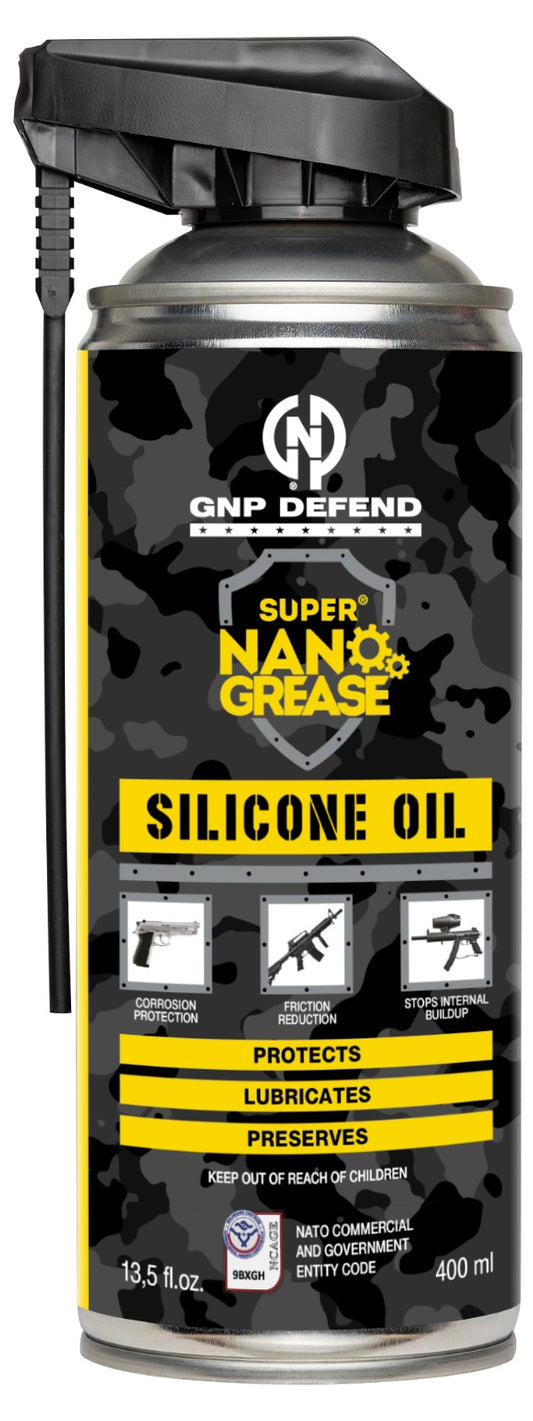
GNP Defend Silicone Oil
Regular price From $20.95Regular priceUnit price per

A compound bow operates under serious mechanical load every time you draw. Cams rotate, axles spin, cables flex under tension, and limb pockets absorb shock — all in a fraction of a second. Compound bow maintenance is the routine of keeping those systems clean, lubricated, and reliable so your bow performs the same way on shot 1 as it does on shot 2,000.
At GNP Defend, we make silicone-based lubricants specifically formulated for the materials inside modern compound bows — metal axles, composite cam bodies, polymer slides, and rubber components. This page covers everything you need to know about caring for your bow and where our GNP Defend Silicone Oil fits into your routine.
Definition: Compound bow maintenance refers to the regular inspection, cleaning, and lubrication of moving parts — cams, axles, limb pockets, cable slides, and strings — to prevent wear, reduce friction, and ensure consistent, safe performance. A properly maintained bow shoots quieter, draws smoother, and lasts significantly longer.
Why Compound Bow Maintenance Matters
Every draw cycle pushes your bow's components against each other under high tension. Over time — and faster than most archers expect — friction builds at the axles, cam grooves dry out, and cable slides start to drag. The result isn't a sudden failure; it's a slow degradation of accuracy, draw consistency, and component life.
The good news is that preventing this takes very little time. A simple routine of inspection and light lubrication every 1,500 to 2,000 shots protects your bow's moving parts and keeps your draw cycle feeling the same way season after season.
Archers who skip maintenance often notice it first in their groupings — shot-to-shot inconsistency that shows up on paper before anything feels obviously wrong. By the time a cam bearing sounds gritty or a cable creaks, friction has already been doing damage.
Key Areas That Require Regular Attention
Not every part of a compound bow needs the same level of care. These are the components that experience the most movement, stress, or environmental exposure during normal use:
Cam axles and cam bearings
The axles are your bow's highest-friction points. They spin under load every single draw. Open axle systems benefit from light oil applied directly to the axle pin. Sealed cam bearings generally don't need oil added — but they do need to be inspected for play or roughness. A dry or gritty cam axle is one of the fastest ways to lose draw consistency and cam timing.
Cable slides and cable guard rails
The cable slide moves laterally every time you draw, dragging under the pressure of the cables above it. A dry slide creates drag that affects draw weight feel and can accelerate cable wear. A small amount of silicone lubricant on the rail keeps this contact point smooth without attracting grit.
Limb pockets and limb bolt threads
Limb pockets collect debris from outdoor shooting and can loosen slightly over time. Check that limb bolts are properly torqued at manufacturer spec and that the pocket area is free of dirt and moisture. A very light coat of lubricant on the bolt threads prevents galling and makes future adjustments easier.
Strings and cables
Strings and cables are not oiled — they are waxed. Bowstring wax protects the fibers, reduces fraying at wear points, and prevents moisture absorption. Inspect your strings before every session for fraying, serving separation, or broken strands. Replace strings and cables at manufacturer-recommended intervals or at the first sign of visible wear.
Sight mounting hardware and arrow rest
Sight screws and arrow rest mounting points should be checked for tightness periodically, especially after heavy use or transport. Loose hardware vibrates free over time and affects accuracy.
For a deeper walkthrough of each area, read our full guide: Compound Bow Maintenance with Modern Silicone Care.
Why Silicone Oil for Compound Bows?
Petroleum-based lubricants and general-purpose oils like WD-40 can swell composite cam bodies, degrade rubber components, and leave behind residues that attract grit. Silicone oil avoids all of these problems — it creates a thin, stable, non-reactive barrier on metal contact points that reduces friction without attacking the polymers, rubber O-rings, and composite materials found throughout modern compound bows.
Our GNP Defend Silicone Oil is an aerosol-application silicone lubricant designed to penetrate, clean, and protect moving metal parts. It works on cam axles, cable slide rails, and any metal-on-metal contact point in your bow's system.
- Safe for metal, polymers, rubber, and composite surfaces
- Penetrates to contact points — doesn't just coat the surface
- Protects against moisture and corrosion
- Leaves no sticky residue to attract debris
- Stable from -58°F to +392°F — consistent performance in cold-weather hunting
- 400ml aerosol for precise, controlled application
Compound Bow Maintenance Schedule
How often you maintain your bow depends on how often you shoot and in what conditions. Hunters shooting in wet, dusty, or cold environments need to inspect and lubricate more frequently than target archers shooting indoors. Use this schedule as a baseline and adjust based on your conditions.
| Task | Frequency | What to look for |
|---|---|---|
| Inspect strings and cables | Every session | Fraying, serving separation, broken strands |
| Apply bowstring wax | Every 2–3 weeks of regular use | Dry or fuzzing string fibers |
| Check cam rotation and alignment | Every few sessions | Roughness, drag, cam timing issues |
| Check limb bolts and hardware | Every few sessions | Looseness, stripped threads, debris in pockets |
| Lubricate cam axles with silicone oil | Every 1,500–2,000 shots | Gritty feel, draw inconsistency, audible cam drag |
| Lubricate cable slide rail | Every 1,500–2,000 shots or seasonally | Drag on draw, visible wear on slide surface |
| Full professional inspection | Once per year | Draw weight, timing, limb condition, press service |
How to Apply Silicone Oil to a Compound Bow
Applying lubricant to a compound bow takes less than five minutes and requires nothing beyond a lint-free cloth and your silicone oil. The goal is a very light, even coat at contact points — not a soaking.
- Wipe cam axle points and cable slide rail with a clean, dry cloth to remove existing grit and residue.
- Apply a short burst of GNP Defend Silicone Oil directly to each axle pin and the cable guide rail.
- Use a clean applicator or cloth to spread the oil evenly and wipe away any excess.
- Cycle the bow slowly by hand a few times to distribute lubrication through the contact points.
- Wipe down any areas where excess oil has migrated — particularly away from string and cable contact zones.
Important: Never apply oil directly to bowstrings or cables. String material requires bowstring wax, not oil. Oil on strings breaks down fibers and dramatically shortens string life.
Warning Signs Your Compound Bow Needs Maintenance
Most compound bow problems announce themselves before they become serious. Watch for these signs during or after shooting sessions:
- Gritty or rough cam rotation — the cams should spin freely with no resistance when the bow is undrawn
- Audible creaking or squeaking during the draw cycle — usually dry axles or a dry cable slide
- Inconsistent draw weight feel — shot-to-shot variation in how the draw cycle feels, even on the same bow
- Visible cable fuzz or fraying — indicates the cables are past the point where wax can fully protect them
- Vibration or noise after the shot that wasn't present before — often a loose mounting point or dry contact surface
- Cam timing drift — cams arriving at full draw at slightly different points, often caused by uneven friction buildup
For a complete breakdown of every warning sign and what causes each one, read: Signs Your Compound Bow Needs Lubrication — What to Look For.
Common Compound Bow Maintenance Mistakes
- Using WD-40 or petroleum oils — WD-40 is a water displacer, not a long-term lubricant. It evaporates quickly, leaves residue, and can attack composite materials. Use silicone oil instead.
- Over-lubricating — excess oil on cam axles migrates to strings and cables. A small, controlled application is more effective and safer than a heavy coat.
- Ignoring the cable slide — this is the most commonly overlooked wear point on a compound bow. A dry slide adds drag to every single draw.
- Waxing over dirt — always wipe strings clean before applying wax. Waxing over grit grinds debris into the fibers.
- Skipping the post-hunt inspection — outdoor conditions — moisture, dust, plant debris — are harder on bow components than range shooting. Always inspect after field use.
- Dry-firing — even once. The unabsorbed energy of a dry fire can crack limbs, damage cams, and snap strings instantly. Always inspect thoroughly after an accidental dry fire before shooting again.
Frequently Asked Questions
What kind of maintenance does a compound bow need?
Compound bows require regular inspection of strings, cables, cams, and axles; periodic waxing of the bowstring; light lubrication of metal contact points such as cam axles and cable slide rails; and a professional press inspection once per year. Most of this work takes only a few minutes per session.
Do I need to oil my compound bow?
Yes — but only specific parts. Cam axles, cable slide rails, and limb bolt threads benefit from a light application of silicone oil every 1,500 to 2,000 shots. Bowstrings and cables should never be oiled; they require dedicated bowstring wax. Using the wrong product in the wrong place can cause more harm than no maintenance at all.
Can I use WD-40 on my compound bow?
No. WD-40 is a water-displacing spray, not a long-term lubricant. It evaporates quickly, leaves behind a residue that attracts dirt, and can degrade the composite and rubber components found in modern compound bows. Use a silicone-based oil instead — it's stable, non-reactive, and safe for all bow materials.
How often should I lubricate my compound bow?
Cam axles and cable slides should be lubricated approximately every 1,500 to 2,000 shots under normal conditions. Archers hunting in wet or dusty environments should inspect and re-lubricate more frequently. Bowstring wax should be applied every two to three weeks during regular shooting.
Are compound bows high maintenance?
No more than any other precision mechanical tool. A quick inspection before each session and a full lubrication every few months keeps most compound bows in excellent condition for years. The annual professional press inspection is the only step that requires outside help.
What is the lifespan of a compound bow?
A well-maintained compound bow can perform reliably for a decade or more. The components that wear out first are strings and cables, which typically need replacement every two to three years depending on shooting volume. The riser, limbs, and cam system can last indefinitely with proper care.
How long can a compound bow sit unused?
Months to years if stored correctly — dry, temperature-stable, and away from direct sunlight. Before returning to a stored bow, inspect the strings for brittleness, check cam rotation, and apply fresh silicone oil to axle points. Silicone lubricant applied before storage helps protect metal components during long breaks.
Complete Compound Bow Maintenance Guide Library
Every article in our compound bow maintenance series — covering every lubrication point, product comparison, and maintenance question.