
GNP Defend
Gun Oil
- In this collection 1 product
- Ownership American-owned
- NCAGE code 9BXGHRegistered supplier
-
 Sale
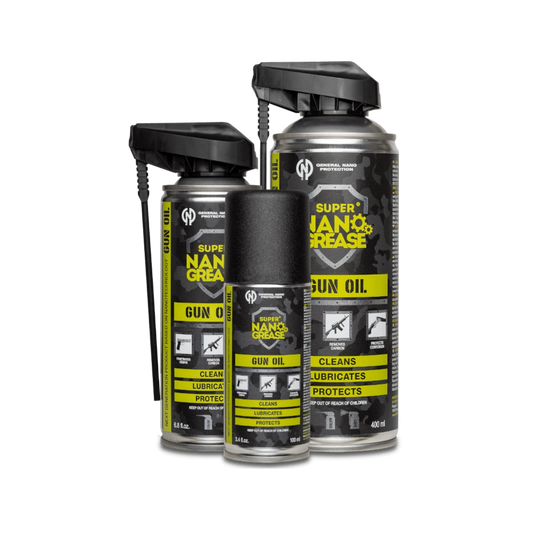
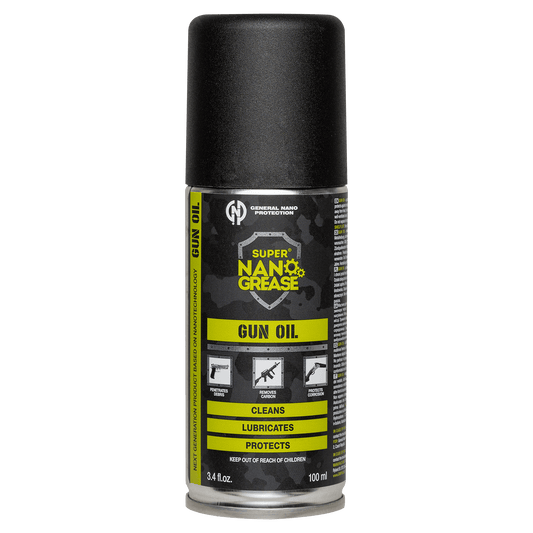
SaleGNP Defend Gun Oil
Regular price From $11.95Regular priceUnit price per$13.99Sale price From $11.95Sale
Gun Oil: The Complete Guide to Firearm Lubrication
Every firearm in regular use needs gun oil. It is one of the few maintenance products that is genuinely non-negotiable — not because manufacturers say so, but because the physics of metal-on-metal contact under firing loads requires lubrication to prevent accelerated wear and corrosion. Yet most firearm owners do not fully understand what gun oil actually does, how it works at a microscopic level, or what separates a properly formulated firearm lubricant from a generic oil pulled off a workshop shelf.
This guide covers the fundamentals — what gun oil is, how it works, the different types available, where and how to apply it correctly, and how to choose the right product for your specific firearms and use cases. Whether you are new to firearm maintenance or you want to understand the chemistry behind the routine you already follow, this is your starting point.
How Gun Oil Works: The Science of Friction Reduction
To understand why gun oil matters, it helps to look at what happens between two metal surfaces at the microscopic level. Even precision-machined firearm components are not perfectly smooth. Under magnification, what appears to be a polished slide rail is actually a landscape of microscopic peaks and valleys called asperities. When two metal surfaces move against each other, these asperities collide — generating heat, removing material, and gradually wearing down the precision of the contact surfaces.
Gun oil works by forming a thin hydrodynamic film between two metal surfaces. This film fills in the microscopic gaps, physically separating the asperities so they glide past each other across a layer of oil rather than colliding directly. The result is reduced friction, dramatically reduced wear, and smoother mechanical operation.
Boundary Lubrication vs Full-Film Lubrication
Firearms operate in two different lubrication regimes depending on load and movement speed. Under most operating conditions — moderate pressure, normal cycling speed — the oil film is thick enough to completely separate the contact surfaces. This is called full-film lubrication and is the ideal condition for minimizing wear.
Under extreme conditions, such as the peak pressure moment of a firing cycle, the oil film can be partially squeezed out from between high-pressure contact surfaces. This is called boundary lubrication. In boundary conditions, anti-wear additives in quality gun oils form a chemical protective layer directly on the metal surfaces — providing protection even when the physical oil film is compromised. This is why a properly formulated gun oil contains far more than just a base oil — the additive package is what protects your firearm under the moments of highest stress.
Why Viscosity Matters
Viscosity is the measure of how thick or thin a fluid is — how easily it flows. Gun oil viscosity is a critical engineering trade-off. Too thin, and the oil migrates away from contact surfaces quickly and provides inadequate film strength under load. Too thick, and the oil resists firearm cycling, slows mechanical operation, and can gum up in tight clearances.
Quality gun oils are formulated with viscosity profiles specifically tuned for firearm operating conditions — thick enough to stay in place on rails and pivot points, thin enough to flow into the tight gaps between precision components. Temperature affects viscosity significantly: as a firearm heats up during firing, the oil thins. As it cools or sits in cold storage, the oil thickens. The best gun oils maintain workable viscosity across the full range of conditions a firearm encounters.
The Three Jobs of Gun Oil
A properly formulated gun oil performs three distinct functions simultaneously. Understanding these three jobs is the foundation of all firearm lubrication decisions.
Different surfaces inside a firearm prioritize these jobs differently. Slide rails care most about friction reduction. Exterior metal surfaces care most about corrosion protection. The interior of a fired AR-15 bolt carrier group cares deeply about all three. A complete understanding of gun oil starts with knowing which surfaces need which protection most.
Types of Gun Oil
The firearm lubrication market offers several types of gun oil, each with distinct characteristics. Knowing the differences helps you choose the right product for your specific needs.
Synthetic Gun Oil
Synthetic gun oils are built around base oils that are chemically engineered rather than refined from crude petroleum. Because the molecular structure can be controlled precisely, synthetic base oils typically offer better viscosity stability across temperature ranges, longer film life, and improved resistance to oxidation over time. Synthetic gun oils are the preferred choice for high-volume shooting applications, extreme temperature environments, and long-term storage where film stability matters most.
Mineral-Based Gun Oil
Mineral oils are refined from crude petroleum and have been used in firearm maintenance for over a century. Properly formulated mineral-based gun oils — meaning those with strong corrosion inhibitor packages and anti-wear additives — provide reliable lubrication and corrosion protection that meets the needs of most firearm owners. The base oil type matters far less than the quality of the additive package built on top of it. A quality mineral base with a robust additive system can and does outperform an underdeveloped synthetic.
CLP Products
CLP (Clean, Lubricate, Protect) products are multi-purpose formulations that combine light cleaning solvents, lubricant, and corrosion inhibitors in a single product. Originally developed for military field maintenance, CLPs trade some pure lubrication performance for the convenience of one-product simplicity. They are well-suited to quick field maintenance and casual range use, but a dedicated gun oil provides stronger lubrication and longer-lasting protection for serious applications. For a complete comparison, read: Gun Oil vs CLP — Which Is Better for Firearms?
Multi-Purpose Oils (Ballistol, Hoppe's, Rem Oil)
Several legacy products occupy a middle ground between dedicated gun oils and general-purpose lubricants — products like Ballistol, Hoppe's lubricating oil, and Rem Oil. Each has its strengths and its limitations. Ballistol excels on black powder firearms. Rem Oil is convenient for casual maintenance. Hoppe's makes excellent solvents. None of these are optimal as primary lubricants for modern centerfire firearms in regular use, where a dedicated gun oil with a strong corrosion inhibitor package outperforms them all. For deep comparisons, read: Rem Oil vs Gun Oil, Ballistol vs Gun Oil, or Hoppe's Oil vs Gun Oil.
What to Avoid
Several products are commonly used on firearms but should not be. Cooking oils go rancid and form abrasive residues. Automotive motor oil contains detergents and additives designed for engines, not firearm operating conditions. General-purpose machine oils lack the corrosion inhibitor packages required for firearm metal protection. And most notably, WD-40 is not a gun oil — it is a water displacement product that evaporates within days and provides no durable lubrication or protection. Always use a product specifically formulated for firearm use.
How to Apply Gun Oil
Application matters as much as product selection. Too little oil leaves surfaces unprotected. Too much creates a debris-attracting sludge that degrades reliability. The right approach is precise and minimal.
Where to Apply
Gun oil belongs on every metal-on-metal friction surface and on all exterior metal for corrosion protection. The specific lubrication points vary by firearm type:
- Pistols: Slide rails, barrel exterior and hood, locking lug surfaces, trigger pivot pins, recoil spring guide rod, disconnector contact surfaces
- AR-15 and semi-auto rifles: Bolt carrier group rails and exterior, cam pin and cam pin channel, bolt lugs and bolt face, charging handle rails, gas rings, upper receiver interior rails
- Bolt-action rifles: Bolt body, bolt lugs, cocking piece cam surface, action rails, trigger components
- Revolvers: Crane pivot, cylinder back, hand and pawl contact surfaces
- Shotguns: Bolt rails, action bar contact surfaces, trigger group pivots
- All firearms: Bore (light coat for storage), exterior metal (light coat for corrosion protection)
For a complete lubrication point guide with diagrams and detail for every firearm type, read our dedicated article: Where to Apply Gun Oil on a Firearm.
How Much to Apply
Less is more, with one important exception. For most surfaces, a single drop of oil applied to the friction point and spread by cycling the action is sufficient. A pistol slide rail does not need to be soaked — it needs a thin protective film, which is what a single drop produces when the slide cycles. The goal is coverage without saturation.
The exception is the AR-15 bolt carrier group. AR-15 rifles run best wet — visible oil sheen on the BCG is the correct state for reliable operation. The gas impingement system deposits carbon directly onto the BCG with every shot, and a generously oiled BCG handles this fouling far better than a lightly oiled one.
When to Apply
The universal rule: after every cleaning session without exception. A freshly cleaned firearm has had all protective oil stripped away — putting it into storage or use without re-oiling leaves it vulnerable to wear and corrosion immediately. Beyond that, application frequency depends on use pattern: weekly wipe-down for daily carry firearms, every 3-6 months for stored firearms, and immediately after any moisture exposure. For a complete maintenance schedule, read: How Often Should You Oil a Gun?
When Gun Oil Isn't Enough
Gun oil is the primary lubricant for the vast majority of firearm friction surfaces — but it is not the only product in a complete maintenance setup. Two situations call for additional products beyond oil alone.
High-Pressure Contact Surfaces Need Grease
Certain surfaces inside a firearm experience contact pressures so high that thin oil is squeezed out from between the metal surfaces during the firing cycle. Locking lugs on a 1911-pattern pistol, slide rails on metal-framed pistols, cam pin contact surfaces in an AR-15 — these surfaces benefit from a thicker, semi-solid lubricant that stays in place under load. That product is gun grease. Used in addition to gun oil on these specific surfaces, grease provides film durability that oil alone cannot match. For the complete breakdown, read: Gun Oil vs Gun Grease — Which Should You Use and Where?
Fouling Requires Cleaning, Not More Oil
Applying fresh gun oil over accumulated carbon fouling does not protect the firearm — it traps the abrasive deposits under a fresh oil layer where they continue to grind against precision surfaces. Before re-oiling, the firearm must be cleaned with a dedicated gun cleaner or solvent to remove fouling. Only then does fresh oil provide proper protection. For the complete clean-and-oil sequence, read: How to Clean and Oil a Gun Properly.
Choosing the Right Gun Oil for Your Situation
The right gun oil depends on what you ask it to do. Use this framework to identify your priority and find the dedicated guide for your situation:
| Your Situation | Primary Concern | Read Next |
|---|---|---|
| General firearm maintenance | All-around lubrication and protection | Best Gun Oil — Complete Guide for 2026 |
| Coastal or humid environment | Rust prevention | Best Gun Oil for Rust Prevention |
| Long-term firearm storage | Months-long film durability | Best Gun Oil for Long-Term Storage |
| AR-15 or gas-operated rifle | BCG lubrication under sustained fire | Best Gun Oil for AR-15 |
| Daily concealed carry | Sweat resistance and corrosion protection | How Often Should You Oil a Gun? |
GNP Defend Gun Oil at a Glance
GNP Defend Gun Oil is a dedicated firearm lubricant designed around the principles in this guide — strong film strength, professional-grade corrosion inhibitor package, viscosity stability across temperature ranges, and material compatibility with all common firearm finishes and polymer components.
What separates GNP Defend Gun Oil from most products on the market is independent verification. In 2023, the Military Institute of Armament Technology (WITU) — Poland's national military weapons research laboratory — tested GNP Defend Gun Oil on eight different service firearms and issued a formal certified opinion confirming reliable firearm function from -35°C to +50°C (-31°F to +122°F), zero corrosion after 14 days at 81-84% humidity, and passing a 10,000-round military lifetime test. Every performance claim is backed by a signed test result, not marketing language.
Gun Oil, Gun Lubricating Oil, Firearm Lubricant: One Product Family
Product labels and search results use several names for firearm lubricants — gun oil, gun lubricating oil, gun lubrication oil, weapon oil, firearm lubricant. They all describe the same category: oil formulated for the friction surfaces, materials, and operating conditions of firearms. Within that family, GNP Defend builds the complete lubrication system: Gun Oil for every friction surface and all exterior metal, Synthetic Grease for the high-pressure contact points where thin oil gets squeezed out under load, and Silicone Oil for seals, O-rings, and air-powered platforms where petroleum products do not belong. For where each one fits, read Gun Oil vs Gun Grease and Gun Oil vs Silicone Oil.
Complete Gun Oil Guide — All Articles
Explore our complete library of firearm lubrication guides — covering fundamentals, firearm-specific applications, and product comparisons.
Fundamentals
Firearm-Specific Guides
Product Comparisons
Frequently Asked Questions
What is gun oil used for?
Gun oil reduces friction between moving firearm components, protects metal surfaces from corrosion, and resists carbon fouling adhesion. It is applied to friction surfaces during cleaning and used for corrosion protection on all exposed metal — the foundation of every firearm maintenance routine.
Is weapon oil the same as gun oil?
Yes — weapon oil and gun oil are two names for the same product: a lubricant formulated specifically for firearms. "Weapon oil" appears more often in military and European usage, while most American shooters say "gun oil," but there is no difference in what the product is or does. GNP Defend Gun Oil is a military-tested weapon oil — independently certified by Poland's Military Institute of Armament Technology (WITU) on eight service firearms.
What is gun lubrication oil?
Gun lubrication oil — also written as gun lubricating oil — is another name for gun oil: a firearm-specific lubricant that reduces friction between moving components, protects against wear and corrosion, and stays in place under heat, pressure, and carbon fouling. Whether a label says gun oil, gun lubrication oil, or firearm lubricant, it refers to the same category of product. GNP Defend Gun Oil is a dedicated gun lubrication oil, independently tested by the Military Institute of Armament Technology.
What is gun oil made of?
Modern gun oils typically consist of a base oil — either synthetic or mineral — combined with an additive package that includes anti-wear agents, corrosion inhibitors, viscosity modifiers, and film-strength enhancers. The base oil provides the lubricating film; the additive package provides the specialized performance characteristics that distinguish a firearm lubricant from a general-purpose oil.
How does gun oil prevent rust?
Gun oil prevents rust through two mechanisms working together. The oil itself forms a physical barrier between metal surfaces and atmospheric moisture. The corrosion inhibitor additives bond to the metal at a molecular level, actively repelling moisture and forming a chemical protective layer. Together they prevent the oxygen-plus-moisture chemistry that causes iron to rust.
How long does gun oil last on a firearm?
It depends on the product, the storage environment, and the use pattern. A quality gun oil applied to a firearm stored in a controlled environment will provide meaningful protection for months. A firearm carried daily against the body, exposed to sweat and humidity continuously, may need wipe-down and re-oil weekly. A firearm exposed to rain or moisture should be re-oiled immediately. As a rule, annual re-oiling is the minimum for any stored firearm — and after every cleaning session is the standard for active-use firearms.
Can you use too much gun oil?
Yes. Excess oil attracts carbon, powder residue, and environmental debris — combining with these contaminants to form a thick, gummy sludge that degrades reliability and accelerates wear. A thin, even film applied to specific friction points is always preferable to saturating the mechanism. The exception is AR-15 bolt carrier groups, which benefit from being run visibly wet for reliable cycling.
What is the difference between gun oil and motor oil?
Motor oil is engineered for high-temperature combustion engine operating conditions — sustained high heat, high RPM cycling, contamination by combustion byproducts. It contains detergent additives designed to keep engine deposits in suspension and friction modifiers tuned for engine bearings. Gun oil is engineered for firearm operating conditions — intermittent high pressure, friction surface protection, corrosion resistance during storage. The additive packages are completely different. Motor oil will lubricate a firearm in the immediate term but provides inadequate corrosion protection and inappropriate additive chemistry for long-term firearm health.
Is synthetic gun oil better than mineral gun oil?
Not automatically. Synthetic base oils generally offer better viscosity stability across temperature ranges and longer film life. But the additive package built on top of the base oil matters more than the base oil type itself. A quality mineral-based gun oil with a strong corrosion inhibitor and anti-wear package will outperform a basic synthetic with minimal additives. Look at the total formulation, not just the base oil label.
Is gun oil safe on polymer frames?
Gun oils formulated specifically for firearms are tested for compatibility with all common modern firearm materials — including polymer frames, rubber components, Cerakote and other coatings, blued steel, stainless, and Parkerized surfaces. General-purpose lubricants and solvents may degrade polymer over time. Always use a product specifically formulated and marketed for firearm use to avoid material compatibility problems.